
Hall's Bakery shares practical, down-to-earth guidance on home baking, artisan bread and cake recipes for readers across the UK.
- 0123456789
- Angle Bd Abdelmoumen & rue soumaya, Résidence
- [email protected]
Hall's Bakery shares practical, down-to-earth guidance on home baking, artisan bread and cake recipes for readers across the UK.
 By Oliver Pemberton
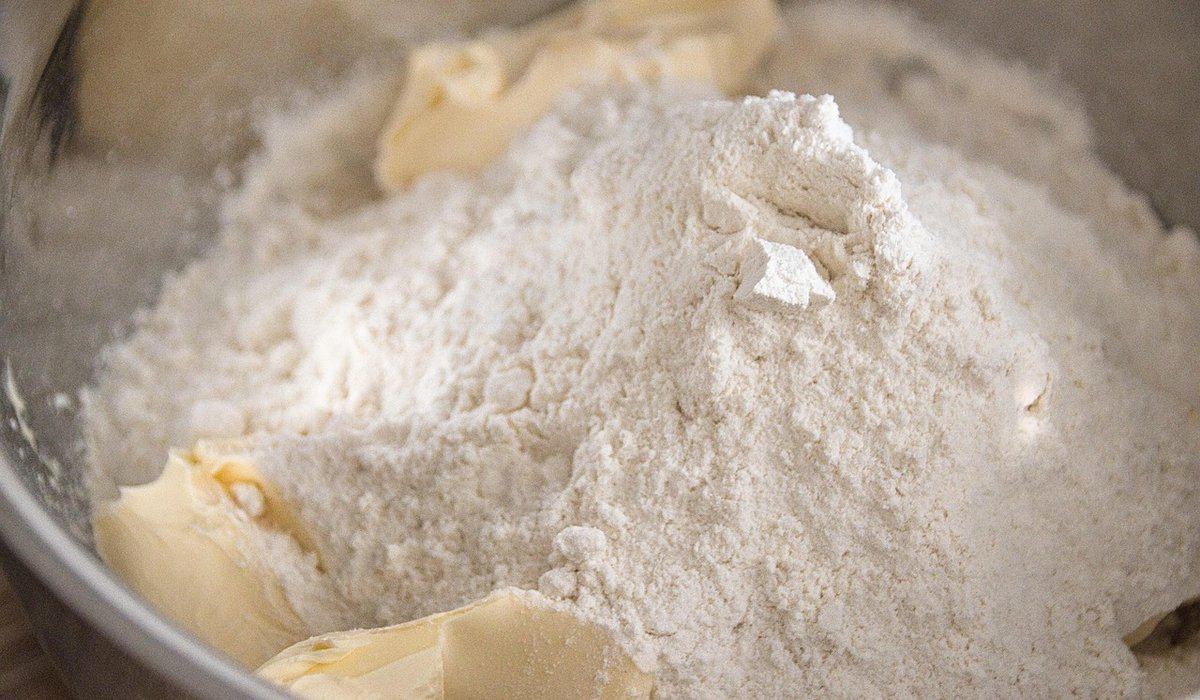
Lamination is simply folding. Every time you roll dough out and fold it back on itself, you trap a thin sheet of butter between sheets of dough. In a hot oven the water inside that butter turns to steam, pushing the layers apart, while the fat sets around them and holds the structure open. That is where the honeycomb crumb and the shatteringly crisp shards of a good croissant or a well-made mille-feuille come from.
The fat does a second job, too. It coats the flour proteins so they cannot form long, chewy strands of gluten. The result is a pastry that is tender rather than tough. Get the folding right and the chilling wrong, though, and you will lose the layers entirely.
A good starting point is equal weights of butter and flour for puff pastry, or roughly half the weight of the flour for croissants. So a dough built on 250g of strong white flour might take a 125g butter block; a puff pastry dough might take 250g.
Pound the butter between two sheets of baking parchment or clingfilm into a neat rectangle about 20cm by 15cm, roughly 1.5cm thick. Square off the edges with the side of the rolling pin, then chill it. The block should be pliable, not hard and not greasy — around 15°C is ideal.
The golden rule of lamination is this: the butter and the dough must be the same consistency. If the butter is firmer than the dough it will crack and tear through; if it is softer it will squirt out at the edges. Touch both with the back of your hand before you start rolling. If one feels colder, give it ten minutes on the worktop.
For croissants, use a strong white flour with a decent protein content so the dough can stretch without tearing. For puff pastry, plain flour or a mix of plain and strong works well. Keep everything cold — cold water, cold bowl, cold hands.
Seal the butter inside like an envelope, press the seams gently, and give the parcel a light tap with the rolling pin before rolling. This softens the butter without warming the dough.
Roll the parcel into a long rectangle roughly three times as long as it is wide. Keep the edges square and the thickness even, rolling from the middle outwards and lifting the dough rather than dragging it. Dust with as little flour as you can get away with, and brush off any excess.
For a single turn, fold one third of the dough into the middle, then fold the other third over it — a letter fold. For a double turn, fold both short ends into the centre, then fold the whole thing in half again like a book. Each single turn triples the number of layers: three turns gives twenty-seven, six gives seven hundred and twenty-nine.
Croissants usually take three single turns. Puff pastry often takes six for a finer, more delicate flake. Whatever you choose, chill for 30 to 60 minutes between every turn — longer if your kitchen is warm. Roll in the same direction each time to keep the layers building neatly on top of one another.
Butter escaping at the edges is the most common problem, and it nearly always has a simple cause.
If a little butter does appear, dust the spot with flour and carry on. If it is serious, wrap the dough and chill it before continuing.
Shape or cut your pastry with a very sharp knife, straight down, without dragging — a clean cut edge lets the layers rise freely. Chill the shaped pieces for 20 to 30 minutes before baking so the butter is firm when it hits the heat.
Bake puff pastry at around 220°C (200°C fan) and croissants at 200°C (180°C fan), turning the tray down slightly if they colour too fast. Resist opening the oven door for the first fifteen minutes; a drop in temperature lets the steam escape before the layers have set, and the pastry will slump. Egg-wash croissants before they go in, and glaze puff pastry with a little milk or water instead if you want a drier, crisper finish.
Cool on a wire rack so steam can escape from underneath, and eat them the same day. Laminated pastry softens quickly once wrapped, so freeze unbaked shapes instead and bake them from frozen when you want them — allowing an extra few minutes in the oven.


We are not gonna make spamming
